





Denise Sekaquaptewa
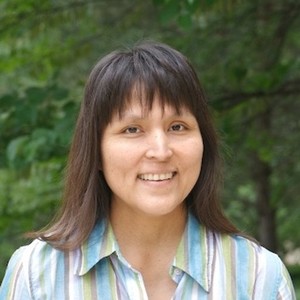
Denise Sekaquaptewa is University Diversity and Social Transformation Professor of Psychology, and a Faculty Associate at the Research Center for Group Dynamics in the Institute for Social Research, University of Michigan, Ann Arbor.
Professor Sekaquaptewa's current research is focused on stereotyping, prejudice, stereotype threat, and the effects of category salience on test performance. One line of research concerns the test performance of solo vs. nonsolo group members. When one's social category is made salient via solo status (being the only member of one's social category in a group), academic performance is diminished, especially when the situation is one where the solo is stereotyped as a poor performer (e.g., females answering questions about science). Performance is less affected when the solo is not negatively stereotyped. A second line of research addresses the relationship between stereotype use and discrimination. Professor Sekaquaptewa's research shows that people who rely on stereotypes in processing have more negative social interactions with members of stereotyped groups, independent of how they feel about the stereotyped group. A third line of research bridges the first two by examining the interaction of implicit stereotyping and susceptibility to the negative influence of stereotype threat.
Primary Interests:
- Attitudes and Beliefs
- Culture and Ethnicity
- Gender Psychology
- Intergroup Relations
- Interpersonal Processes
- Prejudice and Stereotyping
- Social Cognition
Research Group or Laboratory:
Note from the Network: The holder of this profile has certified having all necessary rights, licenses, and authorization to post the files listed below. Visitors are welcome to copy or use any files for noncommercial or journalistic purposes provided they credit the profile holder and cite this page as the source.
Image Gallery
Video Gallery

Using Environmental Cues to Create Inclusive Environments in Academia
Select video to watch
-
10:19 Using Environmental Cues to Create Inclusive Environments in Academia
Length: 10:19
-
1:26:15 Psychology: Exploring the Mind
Length: 1:26:15
-
45:30 Women of Color in the Academy: What's Next?
Length: 45:30
-
58:50 Stereotyping, Implicit Bias, and the Experiences of Women and Underrepresented Minorities in STEM
Length: 58:50
-
7:11 Stereotypes About Women in Science
Length: 7:11
-
3:56 On Being a Native Woman in Psychology
Length: 3:56
-
3:51 Sexism and Microaggressions in STEM
Length: 3:51
-
2:28 Reflections and Contributions to Feminist Psychology
Length: 2:28
-
3:56 Solo Status Research
Length: 3:56
-
1:30:20 Social Psychological Perspectives on the Racism Pandemic
Length: 1:30:20
Journal Articles:
- Betz, D. E., & Sekaquaptewa, D. (2012). My fair physicist? Feminine math and science role models demotivate young girls. Social Psychological and Personality Science, 3, 738-746.
- Betz, D. E., Ramsey, L. R., & Sekaquaptewa, D. (2013). Perceiving race relevance in everyday events: Target race matters, perceiver race does not. Group Processes and Intergroup Relations, 16(6), 699-716.
- Derricks, V., & Sekaquaptewa, D. (2021). They're comparing me to her: Social comparison perceptions reduce belonging and STEM engagement among women with token status. Psychology of Women Quarterly, 45(3) 325-350.
- Kiefer, A. K., & Sekaquaptewa, D. (2007). Implicit stereotypes and women's math performance: How implicit gender math stereotyping influences women's susceptibility to stereotype threat. Journal of Experimental Social Psychology. 43, 825-832.
- Kiefer, A. K., & Sekaquaptewa, D. (2007). Implicit stereotypes, gender identification, and math-related outcomes: A prospective study of female college students. Psychological Science, 18, 13-18.
- LaCosse, J. L., Sekaquaptewa, D., & Bennett, J. (2016). STEM Stereotypic Attribution Bias among women in an unwelcoming science setting. Psychology of Women Quarterly, 40, 378-397.
- Sekaquaptewa, D. (2011). Discounting their own success: A case for the role of implicit stereotypic attribution bias in women's STEM outcomes. Psychological Inquiry, 22, 291-295.
- Sekaquaptewa, D., & Espinoza, P. (2004). Biased processing of stereotype-incongruency is greater for low than high status groups. Journal of Experimental Social Psychology, 40, 128-135.
- Sekaquaptewa, D., & Thompson, M. (2003). Solo status, stereotypes, and performance expectancies: Their effects on women’s public performance. Journal of Experimental Social Psychology, 39, 68-74.
- Sekaquaptewa, D., & Thompson, M. (2002). The differential effects of solo status on members of high and low status groups. Personality and Social Psychology Bulletin, 28, 694-707.
- Sekaquaptewa, D., Espinoza, P., Thompson, M., Vargas, P., & von Hippel, W. (2003). Stereotypic explanatory bias: Implicit stereotyping as a predictor of discrimination. Journal of Experimental Social Psychology, 39, 75-82.
- Sekaquaptewa, D., Takahashi, K., Malley, J., Herzog, K., & Bliss, S. (2019). An evidence-based faculty recruitment workshop influences departmental hiring practice perceptions among university faculty. Equality, Diversity and Inclusion, 38(2), 188-210.
- Tatum, T. J. D., & Sekaquaptewa, D. (2009). Teachers and learners: Roles adopted by African Americans and Whites during interracial discussions about race. Group Processes and Intergroup Relations, 12, 579-190.
- Thompson, M., & Sekaquaptewa, D. (2002). When being different is detrimental: The influence of solo status on the performance of women and racial minorities. Analyses of Social Issues and Public Policy, 2, 183-203.
- Von Hippel, C., Sekaquaptewa, D., & McFarlane, M. (2015). Stereotype threat among women in finance: Negative effects on identity, workplace well-being, and recruiting. Psychology of Women Quarterly, 1-10.
- von Hippel, W., Sekaquaptewa, D., & Vargas, P. (1995). On the role of encoding processes in stereotype maintenance. Advances in Experimental Social Psychology, 27, 177-254.
- von Hippel, W., Sekaquaptewa, D., & Vargas, P. (1997). The Linguistic Intergroup Bias as an implicit indicator of prejudice. Journal of Experimental Social Psychology, 33, 490-509.
- Vossoughi, N., Burley, L. C., Foley, R. P., Meadows, L. A., & Sekaquaptewa, D. (2025). Bystanders to bias: Witnessing gendered microaggressions affects men's and women's outcomes in STEM small group contexts. Behavioral Sciences, 15(2):215.
- Vossoughi, N., Munoz-Salgado, A., Aleibar, D., Meadows, L. A., & Sekaquaptewa, D. (2025). The effects of witnessing subtle gender bias versus rudeness on interpersonal outcomes among women and men. Social Psychology of Education, 28, Article 171.
Other Publications:
Courses Taught:
- Experimental Methods in Stereotyping Research
- Experimental Research on Stereotyping and Implicit Bias
- Group Processes
- Introduction to Social Psychology
- Prejudice and Stereotyping: From Personality to Cognition
- Racism Underground: Hidden and Not-So-Hidden Prejudice in Everyday America
- Stereotype Threat and Implicit Bias
- Stereotypes and Stereotyping
- Stereotyping and Gender/Racial Distinctiveness in School and Work Settings
- Stereotyping and Social Distinctiveness
- The Social Psychology of Attitudes
Denise Sekaquaptewa
Department of Psychology
University of Michigan
530 Church Street
Ann Arbor, Michigan 48109
United States of America
- Phone: (734) 647-9685
- Fax: (734) 647-9440
